Which Best Describes the Use of a Stored Procedure
A subprogram that must have at least one IN parameter. IBM Netezza provides a block-quoting mechanism to help ease the definition of the procedure body and to make the content more readable for debugging and learning.

Pin On Interview
Lets start by stating what a stored procedure is.

. Stored Procedures are created to perform one or more DML operations on Database. To create a procedure in Object Explorer. Select the Database - Programmability - Stored Procedures.
System procedures are included with SQL Server. Speed Optimization. A stored procedure - or proc for short - is a set of Structured Query Language SQL statements with an assigned name which are stored in a relational database.
A stored procedure is a SQL code which is. Stored procedures are cached on the server. Stored procedures can be as simple or as complex as you like.
If you simply make a mandate. However one of the. But also keep in mind.
Answer 1 of 4. A stored procedure is a prepared SQL code that you can save so the code can be reused over and over again. In addition the msdb database also contains system.
Procedures are parsed and optimized and you can use an in-memory. If we are using the SSMS use the following steps for creating the stored procedure. So if you have an SQL query that you write over and over again save it as a stored procedure and then just call it to execute it.
A stored procedure or proc for short is a set of SQL statements with an assigned name which are stored in a database as a. In Object Explorer connect to an instance of Database Engine and then expand that instance. Expand Databases expand the.
Execution plans for the process are easily reviewable without having to run the application. In order to use. Stored Procedures should be considered database assembly language.
Doing research for this article I found out that despite of. You can also pass parameters to a stored. The procedure calls are quick and efficient as stored procedures are compiled once and.
The main advantages of stored procedure are given below. In SQL Server we usually come across queries tables views stored procedures and functions. Faster than batches of T-SQL code.
Version of the procedure after the procedure. People often wonder what are the real differences between User Defined. I tried to put in one article all best practices for documenting stored procedures and functions in a relational database.
Stored procedures IBM Netezza stored procedures combine the benefits of SQL to query and manipulate database information with the benefits of a procedural programming language to. If the primary objective of the stored procedure is to be used as you describe it might be best from the outset to consider converting it into a function. It will return the output as follows.
If your shop lacks T-SQL expertise but has a lot of sharp senior application developers then it may be easier to keep the queries in the app. For use in only the most performance critical situations. A subprogram that must return exactly one value.
The purpose of this stored procedure is to allow for the creation of a database through code that is easily moveable to any type of removable media device. Things to remember in the above session are. The absolute worst thing you can do and its horrifyingly.
We review their content and use your feedback to keep the quality high. Which of the following best describes a stored function. A specific type of subroutine that can be available for the applications and that will access the.
It is nothing but the group of SQL statements that accepts some input in the form of. A stored procedure is a series of SQL statements compiled and saved to the database. They are physically stored in the internal hidden Resource database and logically appear in the sys schema of every system- and user-defined database.
If a particular operation you want to perform over and over again then we use the stored procedure.
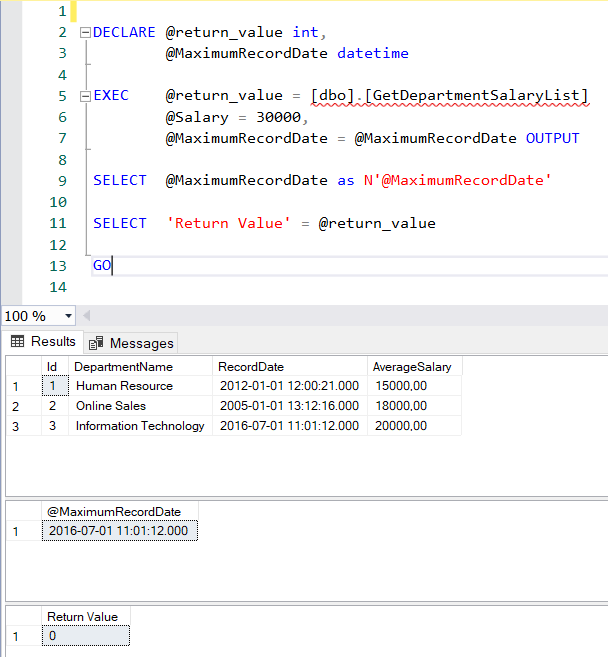
Using Stored Procedures With Return Values
Pin On Ssis Development Tips

Pin On Learn Anatomy Human
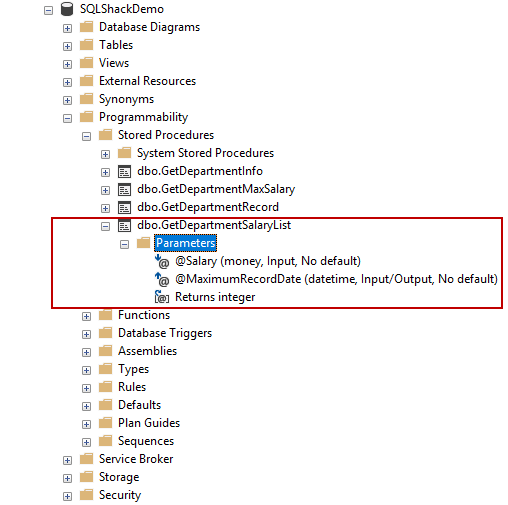
Using Stored Procedures With Return Values
Comments
Post a Comment